

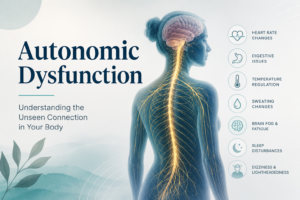
What Is Autonomic Dysfunction?
Autonomic dysfunction is a condition in which the autonomic nervous system fails to properly regulate automatic body functions such as heart rate, blood pressure, digestion, breathing, and temperature regulation. This can lead to symptoms like dizziness, fatigue, digestive problems, fainting, and rapid heart rate.
Also known as dysautonomia, autonomic dysfunction affects multiple organ systems and may significantly impact quality of life. Because symptoms often overlap with anxiety, gastrointestinal disorders, chronic fatigue conditions, and connective tissue disorders, many individuals remain undiagnosed for years.
Understanding the Autonomic Nervous System
The autonomic nervous system (ANS) controls involuntary body functions essential for survival. It continuously regulates circulation, digestion, respiration, temperature control, and stress responses without conscious effort.
To better understand how this system works, read our detailed guide on
Overview of the Autonomic Nervous System.
Sympathetic Nervous System
- Activates the fight-or-flight response
- Increases heart rate
- Raises blood pressure
- Redirects blood flow during stress
Parasympathetic Nervous System
- Promotes rest and recovery
- Supports digestion
- Slows heart rate
- Helps conserve energy
Autonomic disorder develops when these systems become imbalanced or fail to respond appropriately.
Symptoms of Autonomic Dysfunction
Cardiovascular Symptoms
- Rapid heart rate (tachycardia)
- Low blood pressure
- Dizziness or fainting
- Palpitations
- Exercise intolerance
One of the most common cardiovascular manifestations of autonomic disorder is orthostatic hypotension, a condition in which blood pressure drops abnormally when standing. Learn more in our guide on
Understanding Orthostatic Hypotension: Definition, Causes, and Health Risks.
Some individuals also experience recurrent fainting episodes due to abnormal vagal activity and autonomic imbalance. Learn more in our article on
Vasovagal Syncope and Chronic Vagal Excess.
Neurological Symptoms
- Brain fog
- Headaches
- Lightheadedness
- Poor concentration
Digestive Symptoms
- Nausea
- Bloating
- Constipation or diarrhea
- Abdominal discomfort
Autonomic imbalance can significantly affect digestive function because the autonomic nervous system plays a major role in regulating gut motility and secretion.
This interaction between the nervous system and digestive system is commonly referred to as the brain–gut connection. Disruption of this connection may contribute to gastrointestinal disorders such as irritable bowel symptoms and small intestinal bacterial overgrowth (SIBO).
To explore this relationship further, read our article on
The Brain-Gut Connection – Irritable and SIBO/Autonomic Dysfunction.
Some patients with autonomic nervous system disorder also develop delayed stomach emptying, known as gastroparesis. Learn more in:
What is Gastroparesis,
How to Treat Gastroparesis, and
Gastroparesis-Like Syndrome and Dumping Syndrome.
General Symptoms
- Chronic fatigue
- Temperature sensitivity
- Weakness
- Sleep disturbances
Chronic fatigue is one of the most common symptoms associated with autonomic nervous system dysregulation. In some individuals, fatigue may be linked to mitochondrial dysfunction, autonomic imbalance, and chronic inflammatory processes.
Learn more in our articles on
Chronic Fatigue Syndrome, Mitochondrial Dysfunction, and Parasympathetic Excess and
Myalgic Encephalomyelitis (ME)/Chronic Fatigue Syndrome (CFS).
Types of Autonomic Nervous System Dysfunction
- Postural Orthostatic Tachycardia Syndrome (POTS)
- Orthostatic hypotension
- Neurocardiogenic syncope
- Multiple system atrophy
Conditions Associated With Autonomic Nervous System Dysfunction
Ehlers-Danlos Syndrome and Dysautonomia
Ehlers-Danlos syndrome (EDS) is a connective tissue disorder frequently associated with autonomic neuropathy. Many individuals experience symptoms such as dizziness, rapid heart rate, fatigue, joint hypermobility, and circulatory instability.
To understand the relationship between connective tissue disorders and dysautonomia, read our article on
Ehlers-Danlos Syndrome (EDS) and Autonomic Dysfunction.
For a broader introduction to EDS, including early signs, complications, and when to seek medical help, see:
Ehlers-Danlos Syndrome (EDS) Explained: What It Is, Early Signs, Risks, and When to Seek Help — Part 1.
To learn more about EDS symptoms, hypermobility spectrum disorders (HSD), and the connection with autonomic control disorder, read:
Ehlers-Danlos Syndrome (EDS) Part 2: Understanding Symptoms, Subtypes, HSD, and Autonomic Dysfunction.
For information about diagnosis, hypermobility evaluation, and treatment strategies, see:
Ehlers-Danlos Syndrome (EDS) Part 3: Hypermobility Diagnosis, HSD vs hEDS & Treatment Approach.
Some patients develop worsening autonomic symptoms following viral illness, including COVID-19. Read this related case study:
Ehlers-Danlos Syndrome (EDS) Part 4: Undiagnosed Patient Case Study, Symptoms & Autonomic Dysfunction After COVID-19.
Additional research suggests that COVID-19 itself may adversely affect autonomic nervous system function and contribute to long-term dysautonomia symptoms. Learn more in:
Long COVID Adversely Affects the Autonomic Nervous System.
- Dizziness when standing
- Rapid heart rate
- Circulatory instability
- Chronic fatigue
Mast Cell Activation Syndrome (MCAS)
Some individuals with dysautonomia may also experience symptoms related to mast cell activation, including flushing, gastrointestinal symptoms, allergic-type reactions, and inflammation.
Learn more in our article:
Do I Have Mast Cell Activation Syndrome (MCAS)?
Causes of Autonomic Dysfunction
Primary Causes
- Genetic conditions
- Neurodegenerative disorders
Secondary Causes
- Diabetes
- Autoimmune diseases
- Viral infections
- Physical trauma
Diabetes is one of the most common causes of autonomic neuropathy and may accelerate autonomic changes associated with aging. Learn more in our article on
Autonomic Changes with Age: Diabetic Patients.
In some cases, autonomic dysfunction develops due to autoimmune processes that affect the autonomic nervous system. Learn more in our guide on
Autoimmune Autonomic Ganglionopathy and Autoimmune Autonomic Neuropathy.
Diagnosis of Autonomic dysregulation
Diagnosis often requires specialized autonomic testing and a detailed clinical evaluation.
- Tilt table testing
- Heart rate variability analysis
- Blood pressure monitoring
- Autonomic reflex testing
Because symptoms can affect multiple organ systems, patients are often evaluated by cardiologists, neurologists, gastroenterologists, and autonomic specialists.
Treatment Options
Lifestyle Approaches
- Hydration and salt intake
- Compression garments
- Gradual exercise programs
- Sleep optimization
Lifestyle changes are often the foundation of managing autonomic dysfunction. For a more structured strategy, explore our guide on
The Six-Prong Lifestyle for the Treatment of Autonomic Dysfunction.
Supporting vascular and cellular health may also help improve autonomic balance. Nitric oxide contributes to blood vessel function and circulation, while antioxidants may help reduce oxidative stress and support nervous system function.
Learn more in:
Nitric Oxide in Promoting Healthy Autonomic Function and
Maintaining Antioxidant Balance.
Medical Treatment
- Medications for heart rate and blood pressure
- Treatment of underlying conditions
- Management of associated gastrointestinal or autoimmune disorders
Why Autonomic dysregulation Is Often Misdiagnosed
- Symptoms may resemble anxiety disorders
- Standard laboratory tests may appear normal
- Symptoms fluctuate and affect multiple systems
- Awareness of dysautonomia remains limited
Because autonomic nervous system disorder can mimic anxiety, gastrointestinal disorders, chronic fatigue syndromes, connective tissue disorders, and cardiovascular conditions, accurate diagnosis often requires specialized evaluation.
When to Seek Medical Evaluation
If you experience persistent dizziness, fainting, rapid heart rate, unexplained fatigue, digestive issues, or exercise intolerance, it may be appropriate to seek evaluation for autonomic dysfunction.
Early diagnosis and individualized treatment may significantly improve quality of life and long-term symptom management.
You can visit our autonomic dysfunction center for the evaluation.
Frequently Asked Questions
What is autonomic dysfunction?
Autonomic dysfunction is a disorder in which the autonomic nervous system does not properly regulate automatic body functions such as heart rate, blood pressure, digestion, and breathing.
Is autonomic dysfunction the same as POTS?
No. Postural Orthostatic Tachycardia Syndrome (POTS) is one form of autonomic dysfunction.
Can autonomic dysfunction affect digestion?
Yes. Dysautonomia may affect gut motility and contribute to symptoms such as nausea, bloating, constipation, diarrhea, and gastroparesis.
Can autonomic dysfunction be treated?
Many patients improve with individualized treatment, lifestyle changes, and management of underlying conditions.
What doctor treats autonomic dysfunction?
Cardiologists, neurologists, and autonomic specialists commonly diagnose and treat autonomic dysfunction.
Related Resources:
Autonomic System Education
Associated Conditions
- Long COVID Adversely Affects the Autonomic Nervous System
- Ehlers-Danlos Syndrome and Autonomic Dysfunction
- Myalgic Encephalomyelitis (ME)/CFS
- Do I Have Mast Cell Activation Syndrome (MCAS)?
Digestive Disorders
Treatment & Lifestyle
- The Six-Prong Lifestyle for the Treatment of Autonomic Dysfunction
- Nitric Oxide in Promoting Healthy Autonomic Function
- Maintaining Antioxidant Balance