

Click Here to Download this Blog Post -Why Do I Feel Worse as I Get Older? Understanding EDS, HSD, and Your Nervous System
By Dr. Nicholas L. DePace, M..D., F.A.C.C – Cardiologist specializing in autonomic dysfunction, Ehlers-Danlos syndrome and POTS.
If you have Ehlers-Danlos Syndrome (EDS) or Hypermobility Spectrum Disorder (HSD), you have probably noticed a frustrating pattern: you might have been a “bendy” kid with few issues, but as you hit your teens, 20s, or 30s, a “cascade” of symptoms suddenly appeared.
You might feel more tired, dizzy, or in pain than ever before. But there is a reason for this delay—and more importantly, there is real hope for treatment.
The Mystery of “Delayed Onset”
Geneticists are still working hard to find the exact DNA markers for hypermobile EDS. However, we’ve discovered that the reason symptoms often wait until after you’re grown up to appear isn’t just about your joints—it’s about your Autonomic Nervous System (ANS).
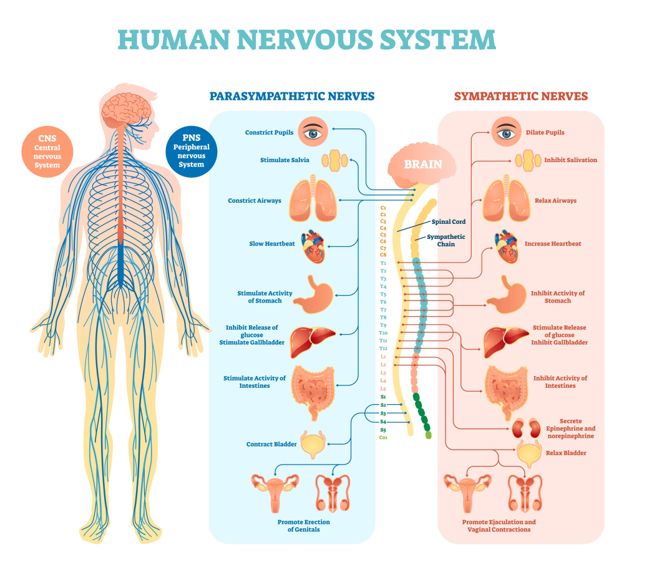
Think of your ANS as the “autopilot” of your body. It controls things you don’t think about, like your heart rate, digestion, and blood pressure. It has two main branches:
- The Sympathetic System: Your “Gas Pedal” (Fight or Flight).
- The Parasympathetic System: Your “Brakes” (Rest and Digest).
In people with EDS/HSD, the “glue” (collagen) that holds the body together is stretchy. Over time, this stretchiness puts a massive amount of oxidative stress on the body. Eventually, the autopilot starts to malfunction.
Why the Autopilot Fails (P&S Dysfunction)
As you pass through the stages of physical development, your body tries to compensate for its stretchy tissues. But eventually, the nervous system gets exhausted. This leads to P&S Dysfunction (Parasympathetic and Sympathetic dysfunction).
When your “gas pedal” and “brakes” aren’t working together:
- Your heart might race for no reason.
- You might feel “brain fog” because blood isn’t reaching your head effectively.
- You might feel exhausted even after a full night’s sleep.
- Your digestion might slow down or become unpredictable.
The Best News: It Is Treatable!
The most important takeaway from recent medical research is this: All P&S dysfunctions associated with EDS/HSD are treatable.
While we cannot yet “fix” the underlying genetic collagen defect, we can fix the way your nervous system reacts to it. By treating the autonomic dysfunction and reducing oxidative stress, patients are seeing incredible results.
The Goal: To move you from just “surviving” to having a high Quality of Life and being productive again.
You Are Not Alone
If you’ve been told your symptoms are “all in your head” or just a part of getting older, this research proves otherwise. Your symptoms are a physical reaction to how your nervous system is managing your hypermobility. With the right approach to P&S health, you can get your autopilot back on track.
Where to Seek Expert Care?
It is important to seek out a clinician with expertise in EDS to make an accurate diagnosis and create a treatment plan. One of the nation’s leading dysautonomia treatment center is Franklin Cardiovascular Associates, under the direction of Nicholas DePace, MD, FACC. They are located in Sicklerville, New Jersey. franklincardiovascular.com, (856) 589-6034
About the Author
Nicholas L. DePace, MD, FACC is a board-certified cardiologist and Medical Director of Franklin Cardiovascular Associates. A graduate of the Mount Sinai School of Medicine, Dr. DePace has decades of clinical, academic, and research experience and has held faculty appointments as a Clinical Professor of Medicine, becoming one of the youngest full professors in Philadelphia at the time of his appointment.
Dr. DePace specializes in the diagnosis and treatment of autonomic nervous system dysfunction (dysautonomia), including POTS, autonomic dysfunction associated with Ehlers-Danlos syndrome (EDS), chronic fatigue, and anxiety-like conditions that are frequently misdiagnosed. He is nationally recognized for his work on parasympathetic and sympathetic (P&S) nervous system imbalance, a core mechanism underlying many complex chronic disorders.
In addition to treating patients from across the United States, Dr. DePace is a prolific clinical researcher and author of multiple nationally distributed medical textbooks published by Springer and W.W. Norton, focusing on autonomic dysfunction, mitochondrial disorders, cardiovascular disease, and mind–body medicine.
👉 View Dr. DePace’s professional profile
👉 View medical books by Dr. DePace