
More Than Sick of Salt

All Posts in Category: EDS

The “Tell-Tale” Profile: How to Spot hEDS in Young Women

Click Here to Download this Blog Post – The “Tell-Tale” Profile: How to Spot hEDS in Young Women (Part 20)

By Dr. Nicholas L. DePace, M..D., F.A.C.C – Cardiologist specializing in autonomic dysfunction, Ehlers-Danlos syndrome and POTS.

If you are a young woman (or parent of one) who seems to be “falling apart” without a clear reason, you fit the most common profile for Hypermobile Ehlers-Danlos Syndrome (hEDS).

While hEDS can affect anyone, clinical experts have noticed a very specific pattern, especially in young females. Recognizing this pattern is often the key to getting a diagnosis after years of confusion.

The Hallmark Sign: Its Not Just the Joints

You might think the main sign of a joint disorder would be joint pain. While pain is definitely part of it, the #1 hallmark that doctors look for is actually Orthostatic Dysfunction.

What does that mean? Simply put: Your body doesn’t know how to handle gravity.

When a typical person stands up, their body automatically adjusts to keep blood flowing to the brain. In hEDS patients, this system fails. This is often a form of Dysautonomia (a glitch in the autonomic nervous system).

The Symptom Checklist

If you have hEDS or HSD, you likely have a mix of these three major categories:

  1. The “Standing Up” Problems (The Hallmark)
  • POTS (Postural Orthostatic Tachycardia Syndrome): Your heart races wildly just because you stood up.
  • Dizziness: You feel lightheaded or see “stars” when moving upright.
  • Temperature Issues: Your internal thermostat is broken. You are sweating when others are cold, or freezing when others are hot.
  1. The Physical Structure
  • Hypermobility: You are “double-jointed” or just very flexible.
  • Easy Bruising: You find bruises on your legs and arms and have no idea where they came from.
  1. The “Crash”
  • Chronic Fatigue : This isn’t just being sleepy. It is a bone-deep exhaustion that sleep doesn’t fix.
  • Chronic Pain: A nagging ache in your muscles and joints that never really goes away.

The Odds Are in Your Favor (Sort of)

The world of Ehlers-Danlos Syndrome can be scary because there are 13 different types, including some that are dangerous to your blood vessels (Vascular EDS) or skin (Classical EDS).

However, here is the reassuring news: 98% of the patients seen in these specialized clinics have the Hypermobile Type (hEDS) or HSD.

While hEDS can make life difficult and painful, it does not carry the same life-threatening risks as the rarer types. It is by far the most common connective tissue disorder, even though many general doctors rarely diagnose it.


Where to Seek Expert Care?

It is important to seek out a clinician with expertise in EDS to make an accurate diagnosis and create a treatment plan. One of the nation’s leading centers is Franklin Cardiovascular Associates, under the direction of Nicholas DePace, MD, FACC. They are located in Sicklerville, New Jersey. franklincardiovascular.com, (856) 589-6034


About the Author

Nicholas L. DePace, MD, FACC is a board-certified cardiologist and Medical Director of Franklin Cardiovascular Associates. A graduate of the Mount Sinai School of Medicine, Dr. DePace has decades of clinical, academic, and research experience and has held faculty appointments as a Clinical Professor of Medicine, becoming one of the youngest full professors in Philadelphia at the time of his appointment.

Dr. DePace specializes in the diagnosis and treatment of autonomic nervous system dysfunction (dysautonomia), including POTS, autonomic dysfunction associated with Ehlers-Danlos syndrome (EDS), chronic fatigue, and anxiety-like conditions that are frequently misdiagnosed. He is nationally recognized for his work on parasympathetic and sympathetic (P&S) nervous system imbalance, a core mechanism underlying many complex chronic disorders.

In addition to treating patients from across the United States, Dr. DePace is a prolific clinical researcher and author of multiple nationally distributed medical textbooks published by Springer and W.W. Norton, focusing on autonomic dysfunction, mitochondrial disorders, cardiovascular disease, and mind–body medicine.

👉 View Dr. DePace’s professional profile
👉 View medical books by Dr. DePace

Read More

Why Does Standing Up Feel So Hard? The “Gravity Battle” in hEDS and HSD

Click Here to Download this Blog Post – Why Does Standing Up Feel So Hard? The “Gravity Battle” in hEDS and HSD
(Part 19)

By Dr. Nicholas L. DePace, M..D., F.A.C.C – Cardiologist specializing in autonomic dysfunction, Ehlers-Danlos syndrome and POTS.

If you live with Hypermobile Ehlers-Danlos Syndrome (hEDS) or Hypermobility Spectrum Disorder (HSD), you probably know the feeling: you stand up to start your day, and suddenly your heart is racing, your head feels foggy, and you’re hit with a wave of exhaustion.

It turns out, your body is fighting a literal battle with gravity. For the vast majority of patients with these conditions, the “glue” that holds the body together (connective tissue) is stretchy, but the “wiring” that controls the body (the nervous system) is also glitching.


The Two Main “Wiring” Glitches

Your Autonomic Nervous System has two main branches: the Sympathetic (the gas pedal) and the Parasympathetic (the brake pedal). In hEDS/HSD, these often malfunction in two specific ways:

  1. Sympathetic Withdrawal (The Failed Gas Pedal): Usually, when you stand up, your sympathetic nerves tell your blood vessels to tighten up, pushing blood upward to your brain. In many patients, this signal fails. The “gas pedal” cuts out, blood pools in your legs, and your brain is left “starving” for blood flow.
  2. Parasympathetic Excess (The Stuck Brake): Sometimes, when your body is under stress, the “brake pedal” slams down too hard. This can cause sudden drops in heart rate or energy when you actually need a boost.

How “Poor Blood Flow” Mimics Other Illnesses?

Because your blood isn’t being pumped efficiently to the top half of your body (a problem called poor perfusion), your organs start to send out distress signals. These signals are often mistaken for other serious diseases:

  • Heart & Lungs: You might feel palpitations, chest pain, or shortness of breath. Often, the heart is perfectly healthy—it’s just struggling because it doesn’t have enough blood to pump!


  • Brain & Mood: When the brain doesn’t get enough blood, it can cause brain fog, fatigue, and fainting. It can even trigger or worsen anxiety, depression, ADHD, or OCD. Your brain is essentially “revving” itself to stay awake and alert despite the low fuel.
  • Digestion: These same nerves control how food moves through your gut. When the wiring glitches, you get stomach pain, bloating, or bathroom issues.

The Difference Between “Stretchy” and “Dangerous”

While hEDS and HSD are the most common types, there is a much rarer form called Vascular EDS (vEDS). It is vital to know the difference:

  • hEDS/HSD: Usually involves “stretchy” skin, loose joints that pop out (subluxations), easy bruising, and chronic pain. While it makes life very difficult, it is not typically life-threatening.
  • Vascular EDS: This involves the blood vessels and organs themselves being fragile. Red flags include a family history of aneurysms, ruptured blood vessels, or intestinal tears—especially in people under 40.

The Path Forward: Testing the Wiring

The good news is that your organs are usually healthy! The problem is the P&S (Parasympathetic and Sympathetic) nerves that tell them what to do.

Specialized testing can help your doctor see exactly how your “wiring” is misfiring. Once you understand your specific needs, you can start a treatment plan—like salt, fluids, compression gear, or medication—to help your body win the battle against gravity.


Where to Seek Expert Care?

It is important to seek out a clinician with expertise in EDS to make an accurate diagnosis and create a treatment plan. One of the nation’s leading centers is Franklin Cardiovascular Associates, under the direction of Nicholas DePace, MD, FACC. They are located in Sicklerville, New Jersey. franklincardiovascular.com, (856) 589-6034


About the Author

Nicholas L. DePace, MD, FACC is a board-certified cardiologist and Medical Director of Franklin Cardiovascular Associates. A graduate of the Mount Sinai School of Medicine, Dr. DePace has decades of clinical, academic, and research experience and has held faculty appointments as a Clinical Professor of Medicine, becoming one of the youngest full professors in Philadelphia at the time of his appointment.

Dr. DePace specializes in the diagnosis and treatment of autonomic nervous system dysfunction (dysautonomia), including POTS, autonomic dysfunction associated with Ehlers-Danlos syndrome (EDS), chronic fatigue, and anxiety-like conditions that are frequently misdiagnosed. He is nationally recognized for his work on parasympathetic and sympathetic (P&S) nervous system imbalance, a core mechanism underlying many complex chronic disorders.

In addition to treating patients from across the United States, Dr. DePace is a prolific clinical researcher and author of multiple nationally distributed medical textbooks published by Springer and W.W. Norton, focusing on autonomic dysfunction, mitochondrial disorders, cardiovascular disease, and mind–body medicine.

👉 View Dr. DePace’s professional profile
👉 View medical books by Dr. DePace
Read More

Could Poor Perfusion in EDS Be the Hidden Cause of 20 Different Symptoms?

Click Here to Download this Blog Post – The Great Masquerader: Why One Glitch Can Cause 20 Different Symptoms
(Part 18)

By Dr. Nicholas L. DePace, M..D., F.A.C.C – Cardiologist specializing in autonomic dysfunction, Ehlers-Danlos syndrome and POTS.

If you have Ehlers-Danlos Syndrome (EDS) or Hypermobility Spectrum Disorder (HSD), your medical chart might look like an alphabet soup of diagnoses.

You might be seeing different specialists for:

It can feel like your body is falling apart in ten different ways at once. But what if these aren’t ten separate diseases? What if they are just ten different symptoms of one underlying problem?

Understanding P&S Dysfunction in Ehlers-Danlos Syndrome

As we have discussed, the core issue in EDS/HSD is often a malfunction in the Parasympathetic and Sympathetic (P&S) nervous systems. When this “wiring” is faulty, it creates a domino effect that impacts almost every system in your body.

The biggest consequence of this glitch is Poor Perfusion.

  • Translation: Your blood isn’t getting pumped efficiently to the top half of your body.

When your nerves don’t tighten your blood vessels correctly, gravity wins. Blood pools in your legs, leaving your brain, heart, and upper muscles starving for oxygen.

What Is Coat-Hanger Pain?

One of the most common complaints in EDS patients is a deep, aching pain that runs across the tops of the shoulders and up the back of the neck.

Doctors often call this “Coat-Hanger Pain” because the pain follows the shape of a clothes hanger.

  • The Mistake: Many people think this is just “stress” or “bad posture.”
  • The Reality: This is actually a sign of poor blood flow. Because your upper body isn’t getting enough blood, the muscles in your neck and shoulders essentially stiffen and cramp. It is your muscles crying out for oxygen.

The Brains “Panic Button” (Adrenalin Storms)

When your brain realizes it isn’t getting enough blood (poor cerebral perfusion), it goes into survival mode. It thinks you are in danger, so it slams the alarm button.

This triggers an “Adrenalin Storm.”

  • Physically: You might feel sudden chest pressure, sweating, or a racing heart.
  • Mentally: You feel a surge of Anxiety or a Panic Attack.

This isn’t necessarily “psychological” anxiety. It is a physiological attempt by your body to force more blood to the brain.

The Connection Between Brain Fog, ADHD, and Cognitive Function

This lack of blood flow can even explain cognitive struggles.

  • Brain Fog: The brain is running on low battery.
  • ADHD/OCD: Some researchers believe that the hyperactivity seen in conditions like ADHD (or even high-functioning Autism) might be the brain’s way of keeping itself stimulated to maintain blood flow. It is “revving the engine” to keep from stalling.

A New Way to Treat: Why Treating the Nervous System Comes First?

This perspective changes everything about treatment. Instead of taking one pill for anxiety, one for pain, and one for digestion, the goal should be to treat the P&S Dysfunction first.

We have seen that when we fix the blood flow issues and calm the nervous system:

  1. The “Coat-Hanger” pain fades because muscles get oxygen.
  2. The “Anxiety” drops because the brain stops hitting the panic button.
  3. The “Brain Fog” lifts.

The Golden Rule: Treat the wiring first. If symptoms still persist after the blood flow is fixed, then (and only then) do we treat the specific organs.

Finding Specialized EDS Care

It is important to seek out a clinician with expertise in EDS to make an accurate diagnosis and create a treatment plan. One of the nation’s leading centers is Franklin Cardiovascular Associates, under the direction of Nicholas DePace, MD, FACC. They are located in Sicklerville, New Jersey. franklincardiovascular.com, (856) 589-6034


About the Author

Nicholas L. DePace, MD, FACC is a board-certified cardiologist and Medical Director of Franklin Cardiovascular Associates. A graduate of the Mount Sinai School of Medicine, Dr. DePace has decades of clinical, academic, and research experience and has held faculty appointments as a Clinical Professor of Medicine, becoming one of the youngest full professors in Philadelphia at the time of his appointment.

Dr. DePace specializes in the diagnosis and treatment of autonomic nervous system dysfunction (dysautonomia), including POTS, autonomic dysfunction associated with Ehlers-Danlos syndrome (EDS), chronic fatigue, and anxiety-like conditions that are frequently misdiagnosed. He is nationally recognized for his work on parasympathetic and sympathetic (P&S) nervous system imbalance, a core mechanism underlying many complex chronic disorders.

In addition to treating patients from across the United States, Dr. DePace is a prolific clinical researcher and author of multiple nationally distributed medical textbooks published by Springer and W.W. Norton, focusing on autonomic dysfunction, mitochondrial disorders, cardiovascular disease, and mind–body medicine.

👉 View Dr. DePace’s professional profile
👉 View medical books by Dr. DePace

Read More

The 24-Doctor Mystery: A Case Study of “Hidden” hEDS

Click Here to Download this Blog Post – The 24-Doctor Mystery: A Case Study of “Hidden” hEDS (Part 17)

By Dr. Nicholas L. DePace, M..D., F.A.C.C – Cardiologist specializing in autonomic dysfunction, Ehlers-Danlos syndrome and POTS.

Does this story sound familiar to you?

A 48-year-old woman walks into a doctor’s office. She isn’t there for a check-up; she is there because she is desperate. She has seen over two dozen doctors in her life—neurologists, heart specialists, rheumatologists—and yet, she still feels terrible.

She has been told she has “Generalized Anxiety.” She has been told she has “Fibromyalgia.” She has been told it is all in her head.

But she knows it isn’t. This is the story of how she finally found the answer.

The History: “Growing Pains” That Never Stopped

Looking back, the clues were there since childhood.

  • School: She was a cheerleader and gymnast (a common history for hypermobile people because they are naturally flexible), but she was always exhausted. She was even home-schooled for a year because she was too tired to go to class.
  • Work: She had to stop working full-time because of chronic “body aches” and brain fog.
  • Daily Life: She was clumsy. Her ankles sprained easily. Her jaw clicked (TMJ). She bruised if you barely touched her. She had trouble sleeping and constantly felt “anxious.”

The Tipping Point

She managed to survive like this for years until she caught a mild case of COVID-19. Afterward, her body seemingly crashed.

Suddenly, her heart would race, and she felt dizzy every time she stood up. The brain fog became unbearable. The “auto-pilot” glitch we discussed earlier (Orthostatic Intolerance) had gone into overdrive.

The Examination: Finding the Clues

When she finally saw a doctor who understood connective tissue disorders, they didn’t just listen to her heart; they looked at the physical evidence that 24 other doctors had missed.

  1. The “Party Tricks” (Beighton Score) The doctor tested her flexibility using the Beighton Score.
  • Could she bend her pinky finger back past 90 degrees?
  • Could she touch her thumb to her forearm?
  • Did her knees and elbows bend backward?
  • Could she touch the floor with her palms flat? She could when she was younger, but her back was stiffer now.
  1. The “Heel Bumps” The doctor looked at her heels and found small, skin-colored bumps called Piezogenic Papules.
  • What are they? Because her tissue is weak, small bits of fat push through the skin layers when she puts weight on her heels. It is a classic sign of EDS.
  1. The Wrist Test The doctor asked her to wrap her thumb and pinky around her other wrist. Because she had long, slender fingers (a trait called arachnodactyly), her pinky overlapped her thumb easily.
  2. The Vital Signs When she stood up, her heart rate jumped from 92 to 120 beats per minute. Her blood pressure dropped. This confirmed her autonomic nervous system was struggling to fight gravity.

The Diagnosis: Tears of Relief

The doctor put it all together: The flexibility, the skin signs, the dizziness, the fatigue, and the history of joint pain.

She met the criteria for Hypermobile Ehlers-Danlos Syndrome (hEDS).

When the doctor explained that she wasn’t “crazy,” that her anxiety was a physical reaction to a struggling nervous system, and that there was a name for her pain, she began to cry. She finally felt vindicated.

The Lesson

This patient suffered for decades because specialists have “tunnel vision.” The cardiologist looked only at the heart; the neurologist looked only at the nerves.

Connective tissue disorders require a “wide lens.” If you see yourself in this woman’s story—if you are the “anxious” patient who is flexible, tired, and hurting—it might be time to stop asking “What is wrong with my heart?” and start asking “What is wrong with my wiring?”

Where to Seek Expert Care?

It is important to seek out a clinician with expertise in EDS to make an accurate diagnosis and create a treatment plan. One of the nation’s leading centers is Franklin Cardiovascular Associates, under the direction of Nicholas DePace, MD, FACC. They are located in Sicklerville, New Jersey. franklincardiovascular.com, (856) 589-6034


About the Author

Nicholas L. DePace, MD, FACC is a board-certified cardiologist and Medical Director of Franklin Cardiovascular Associates. A graduate of the Mount Sinai School of Medicine, Dr. DePace has decades of clinical, academic, and research experience and has held faculty appointments as a Clinical Professor of Medicine, becoming one of the youngest full professors in Philadelphia at the time of his appointment.

Dr. DePace specializes in the diagnosis and treatment of autonomic nervous system dysfunction (dysautonomia), including POTS, autonomic dysfunction associated with Ehlers-Danlos syndrome (EDS), chronic fatigue, and anxiety-like conditions that are frequently misdiagnosed. He is nationally recognized for his work on parasympathetic and sympathetic (P&S) nervous system imbalance, a core mechanism underlying many complex chronic disorders.

In addition to treating patients from across the United States, Dr. DePace is a prolific clinical researcher and author of multiple nationally distributed medical textbooks published by Springer and W.W. Norton, focusing on autonomic dysfunction, mitochondrial disorders, cardiovascular disease, and mind–body medicine.

👉 View Dr. DePace’s professional profile
👉 View medical books by Dr. DePace

Read More

Ancient History, Modern Mystery: What Exactly IS Ehlers-Danlos Syndrome?

Click Here to Download this Blog Post – Ancient History, Modern Mystery: What Exactly IS Ehlers-Danlos Syndrome? (Part 16)

By Dr. Nicholas L. DePace, M..D., F.A.C.C – Cardiologist specializing in autonomic dysfunction, Ehlers-Danlos syndrome and POTS.

If you have Ehlers-Danlos Syndrome (EDS), you might feel like a medical mystery. But believe it or not, doctors have known about “excess mobility” since the days of Hippocrates in 400 BC.

The condition was officially named around 1900 by two dermatologists, Dr. Ehlers and Dr. Danlos. However, it was largely forgotten by modern medicine until 1960, when a doctor at Johns Hopkins brought it back into the spotlight.

Today, we know much more. Here is the breakdown of what is actually happening in your body and why it feels like so many people are suddenly talking about it.

The “Soft Skeleton”: What Goes Wrong?

The common denominator in all EDS and HSD (Hypermobility Spectrum Disorder) cases is Collagen.

Think of collagen as the “glue” that holds your body together. It is the main ingredient in your skin, muscles, ligaments, blood vessels, and heart valves. Experts call it the body’s “soft skeleton.” It supports everything that has shape.

In EDS/HSD patients, this glue is faulty. It’s too stretchy or too fragile. Because this glue is everywhere, the symptoms are everywhere—from loose joints to fragile skin.

Is It Actually Rare?

If you read a medical textbook, it might say EDS is “rare,” affecting about 1 in 5,000 people. Clinical experience suggests otherwise.

When you combine hEDS (the hypermobile type) with HSD (Hypermobility Spectrum Disorder), experts estimate the number is actually closer to 1 in 100 or 1 in 200 people. It is likely not “rare”—just rarely diagnosed correctly.

How Do Doctors Spot It?

To diagnose you, doctors often use a physical test called the Beighton Score. This checks how flexible you are.

  • The Score: A score of 5 out of 9 usually indicates generalized hypermobility.
  • The Age Factor: If you are older, you might not score as high because joints naturally stiffen with age. A good doctor knows this and looks at your history, not just your current flexibility.

Beyond flexibility, they look for:

  • Tissue Fragility: Do you bruise like a peach? Do you scar easily or “weirdly”?
  • Joint Issues: Do you have chronic pain or joints that partially pop out (subluxation)?

The “Red Flag”: Vascular EDS

While there are 13 types of EDS, one requires special attention: Vascular EDS (vEDS).

This type is rare and dangerous because it affects the blood vessels and organs, leading to a shorter life expectancy. It is crucial for doctors to rule this out, especially if you have a family history of vascular events (like aneurysms) before age 50.

Note: Doctors also need to rule out other similar conditions, like Marfan Syndrome or autoimmune diseases like Lupus, to make sure they have the right diagnosis.

“But Nobody Else in My Family Has It…”

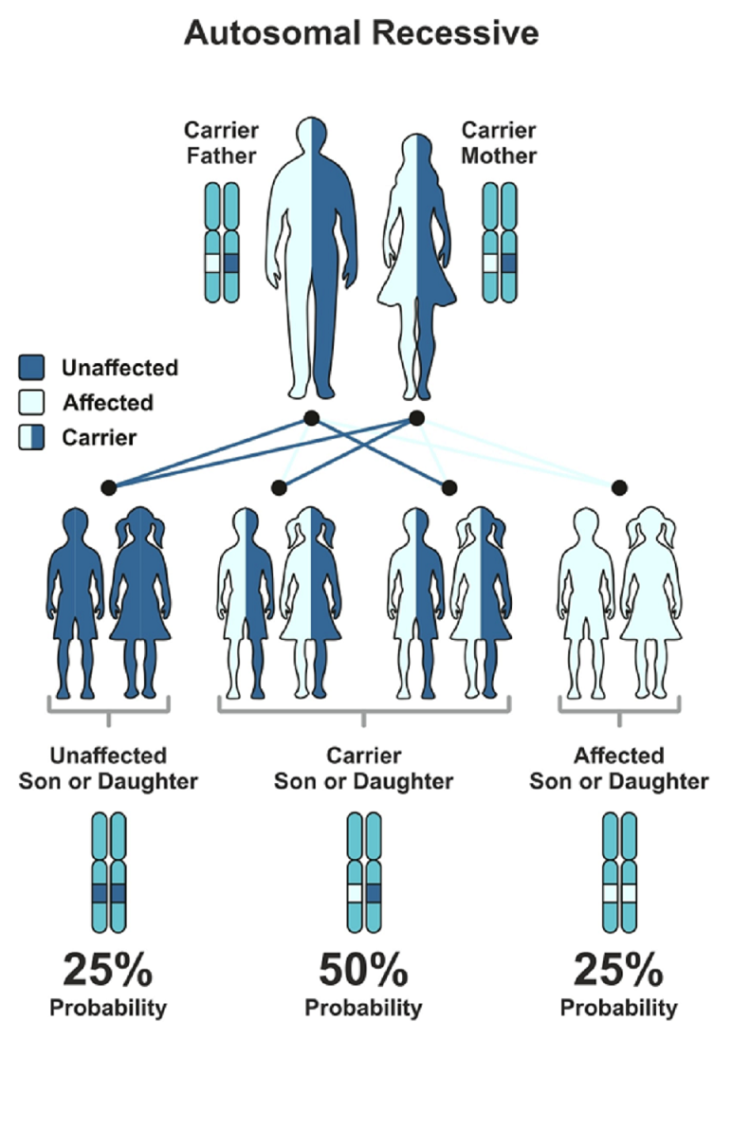
This is a common confusion. While hEDS is often passed down from parent to child (what doctors call “autosomal dominant”), you don’t need a family history to have it.

About 50% of patients have a “de novo” mutation. This simply means the genetic change started with you. You didn’t inherit it, but you could pass it on.

Where to Seek Expert Care?

It is important to seek out a clinician with expertise in EDS to make an accurate diagnosis and create a treatment plan. One of the nation’s leading centers is Franklin Cardiovascular Associates, under the direction of Nicholas DePace, MD, FACC. They are located in Sicklerville, New Jersey. franklincardiovascular.com, (856) 589-6034


About the Author

Nicholas L. DePace, MD, FACC is a board-certified cardiologist and Medical Director of Franklin Cardiovascular Associates. A graduate of the Mount Sinai School of Medicine, Dr. DePace has decades of clinical, academic, and research experience and has held faculty appointments as a Clinical Professor of Medicine, becoming one of the youngest full professors in Philadelphia at the time of his appointment.

Dr. DePace specializes in the diagnosis and treatment of autonomic nervous system dysfunction (dysautonomia), including POTS, autonomic dysfunction associated with Ehlers-Danlos syndrome (EDS), chronic fatigue, and anxiety-like conditions that are frequently misdiagnosed. He is nationally recognized for his work on parasympathetic and sympathetic (P&S) nervous system imbalance, a core mechanism underlying many complex chronic disorders.

In addition to treating patients from across the United States, Dr. DePace is a prolific clinical researcher and author of multiple nationally distributed medical textbooks published by Springer and W.W. Norton, focusing on autonomic dysfunction, mitochondrial disorders, cardiovascular disease, and mind–body medicine.

👉 View Dr. DePace’s professional profile
👉 View medical books by Dr. DePace

Read More